INDUSTRY:
eCommerce
COMPANY:
GoDaddy
ROLE:
Design Lead
DATE:
2023
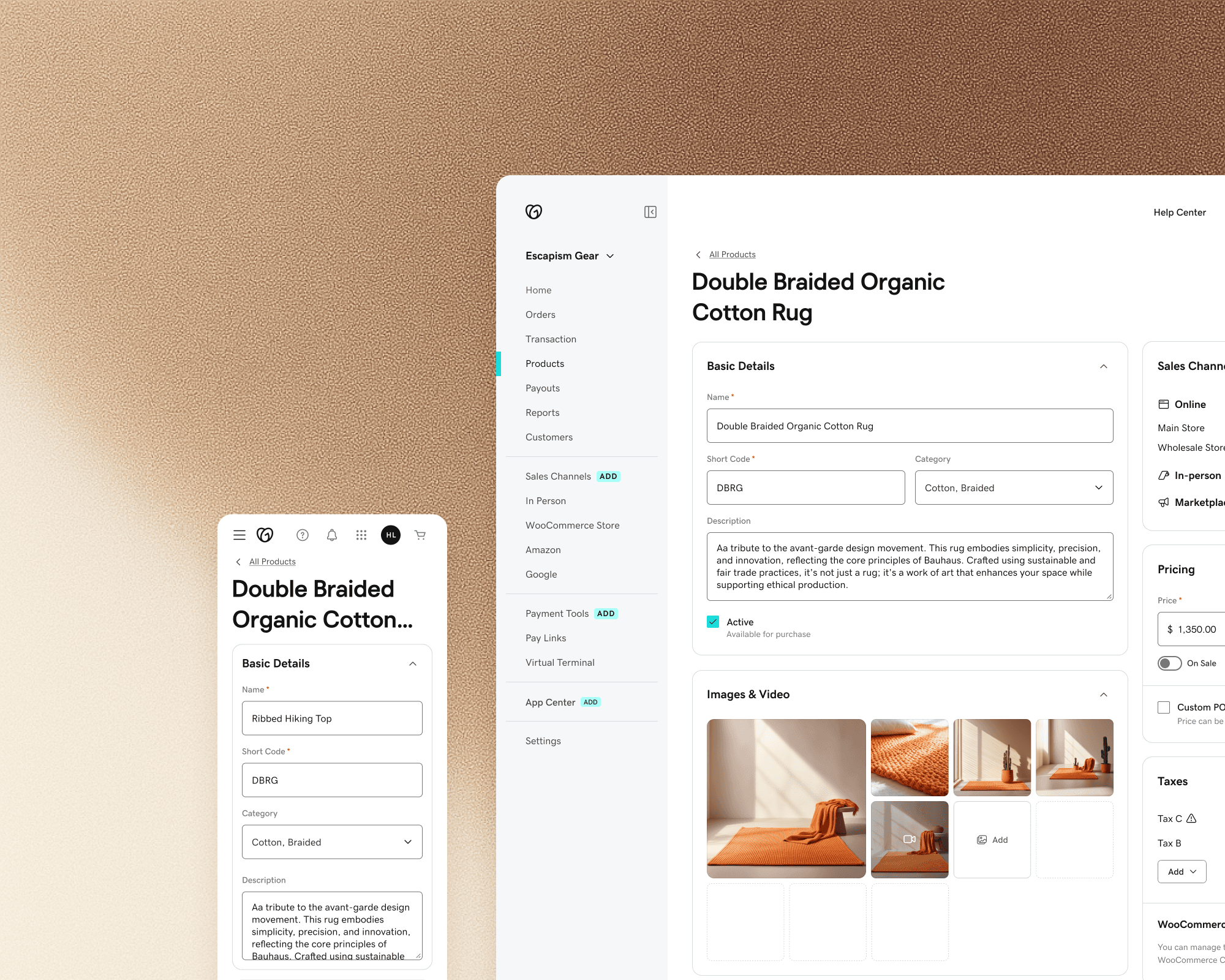
Products 3.0, GoDaddy
Overview.
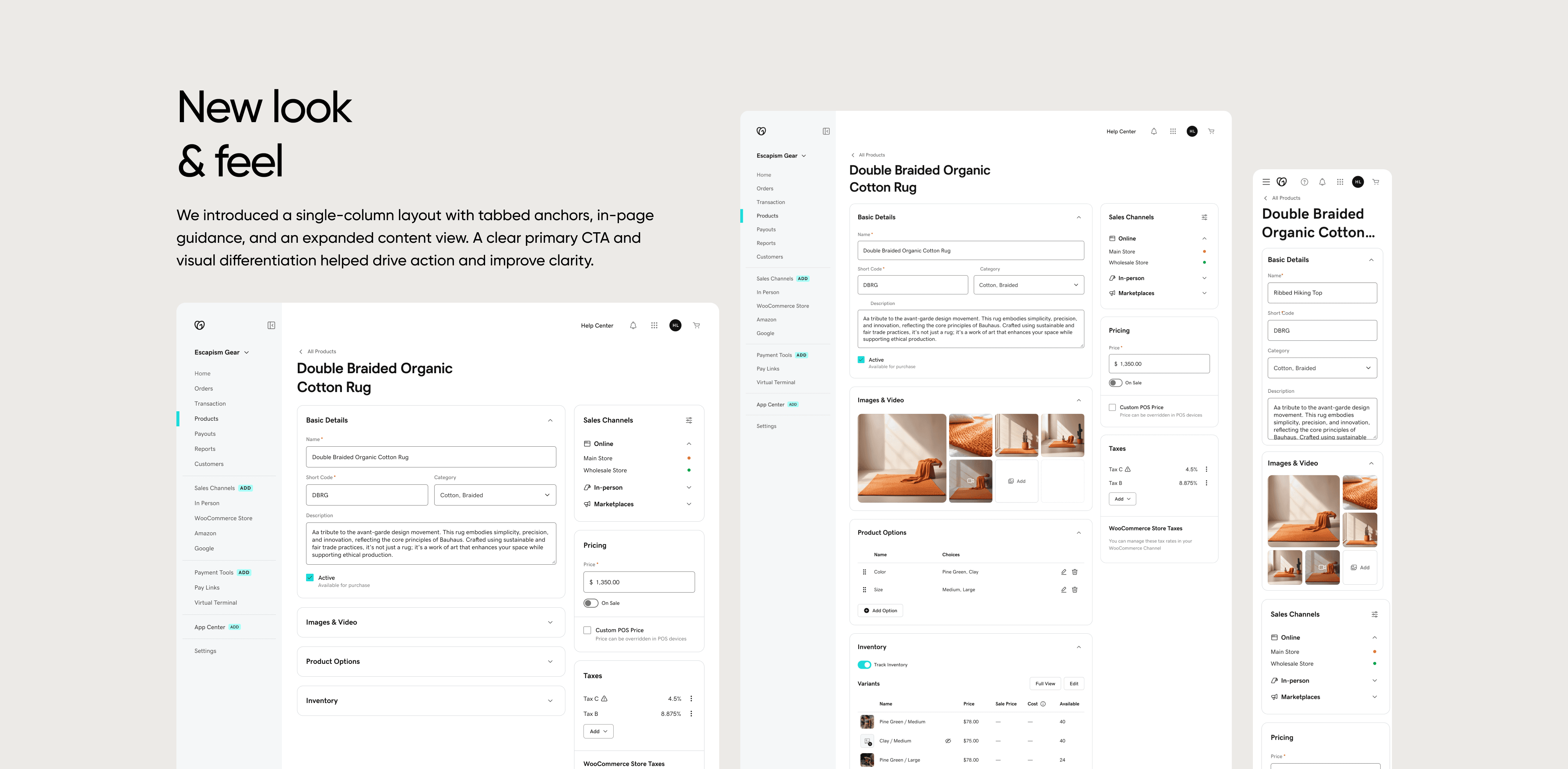
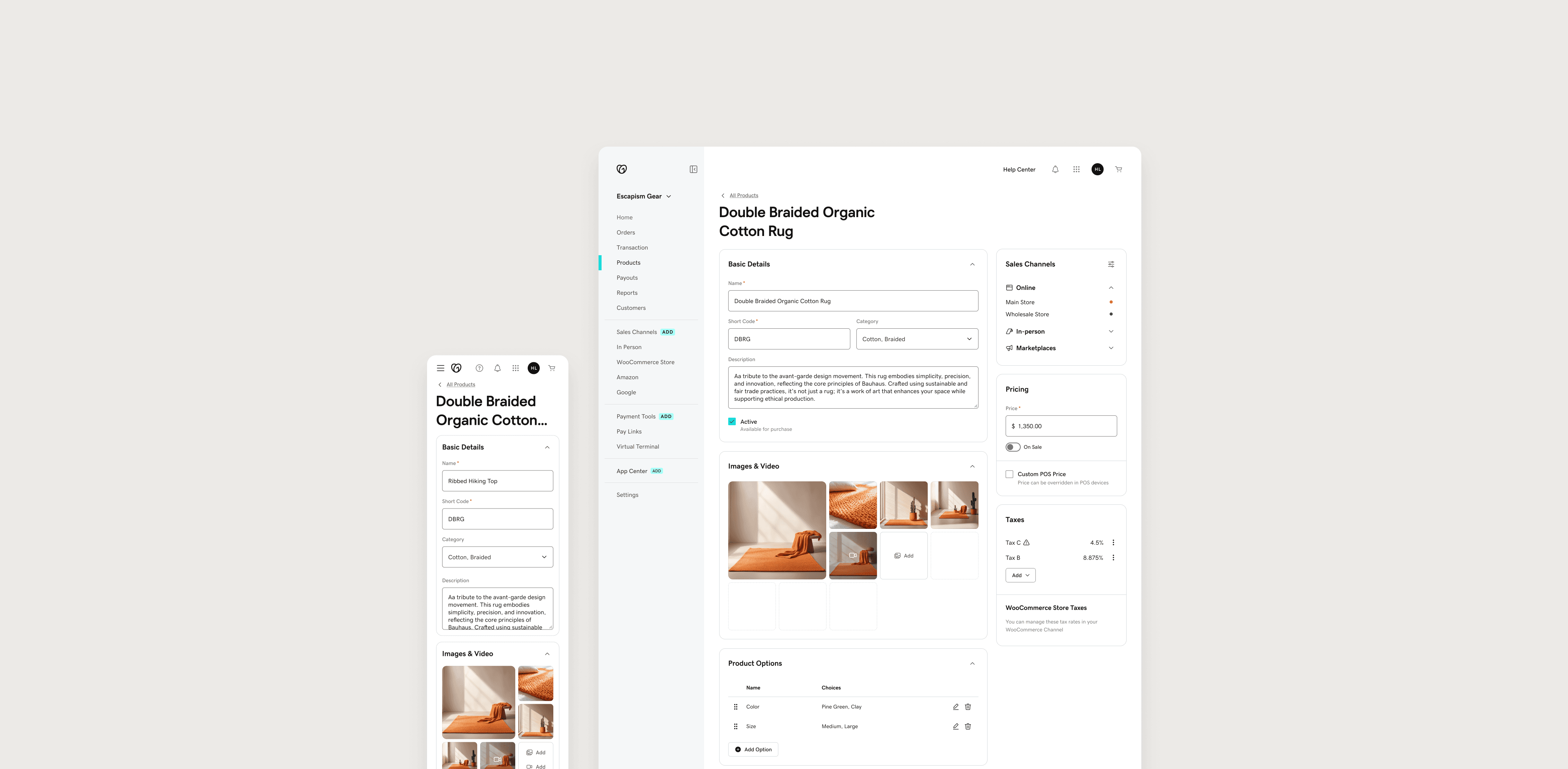
I led a team of three designers in redesigning GoDaddy’s ‘Add Products’ experience — the central flow merchants use to create and manage product listings. Products 3.0 was a top-to-bottom overhaul of the system, aimed at making it faster, more intuitive, and more scalable for users managing large catalogs across multiple sales channels.
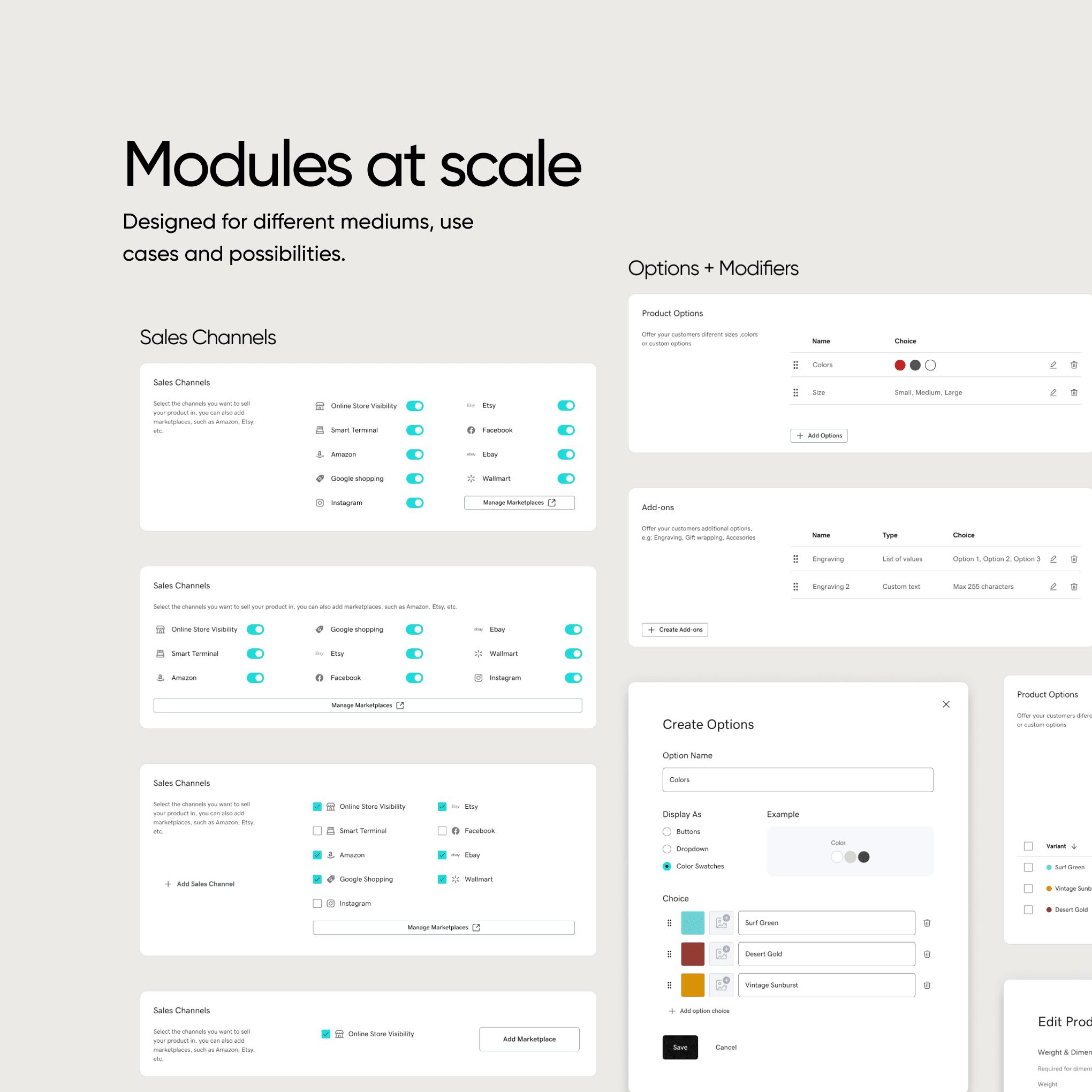
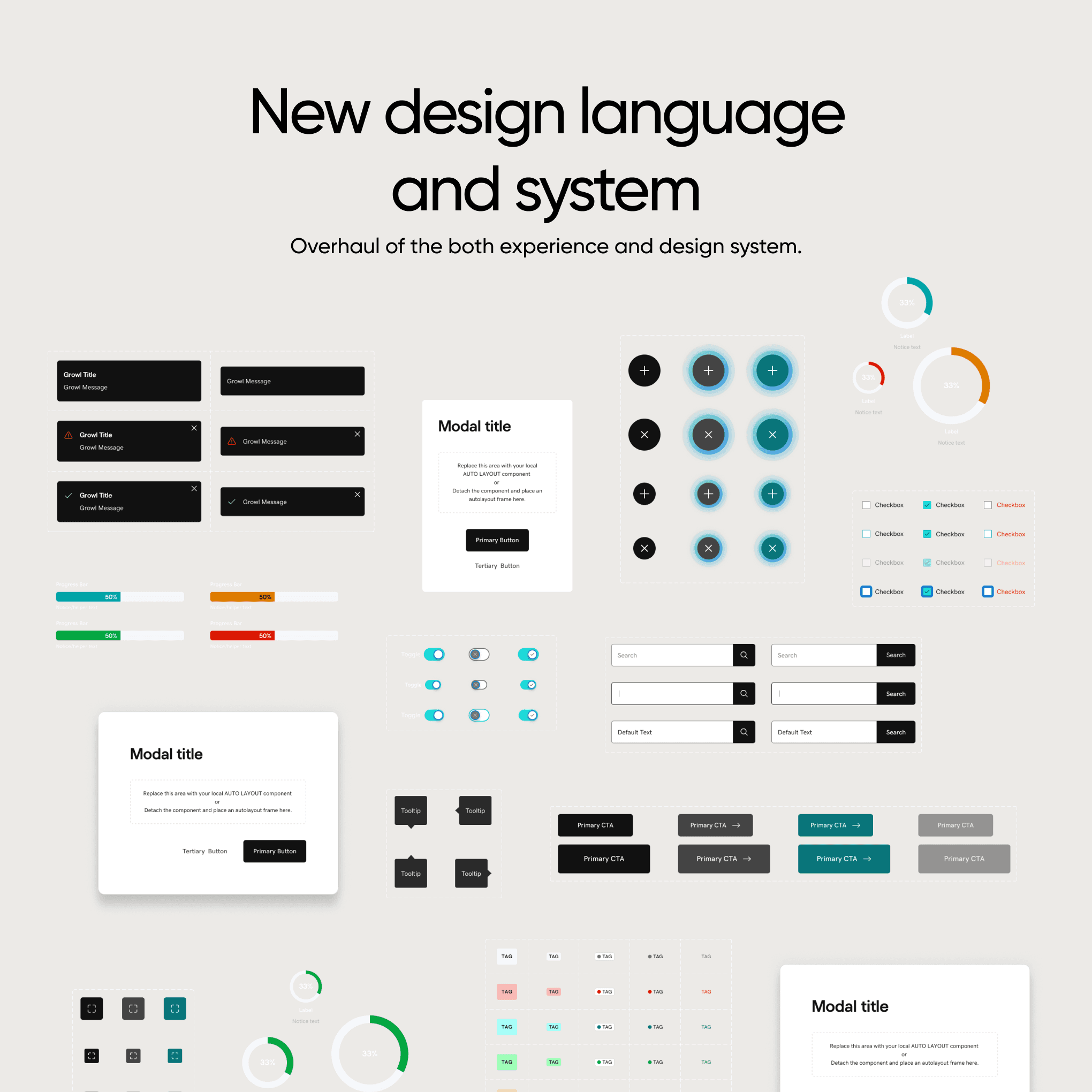
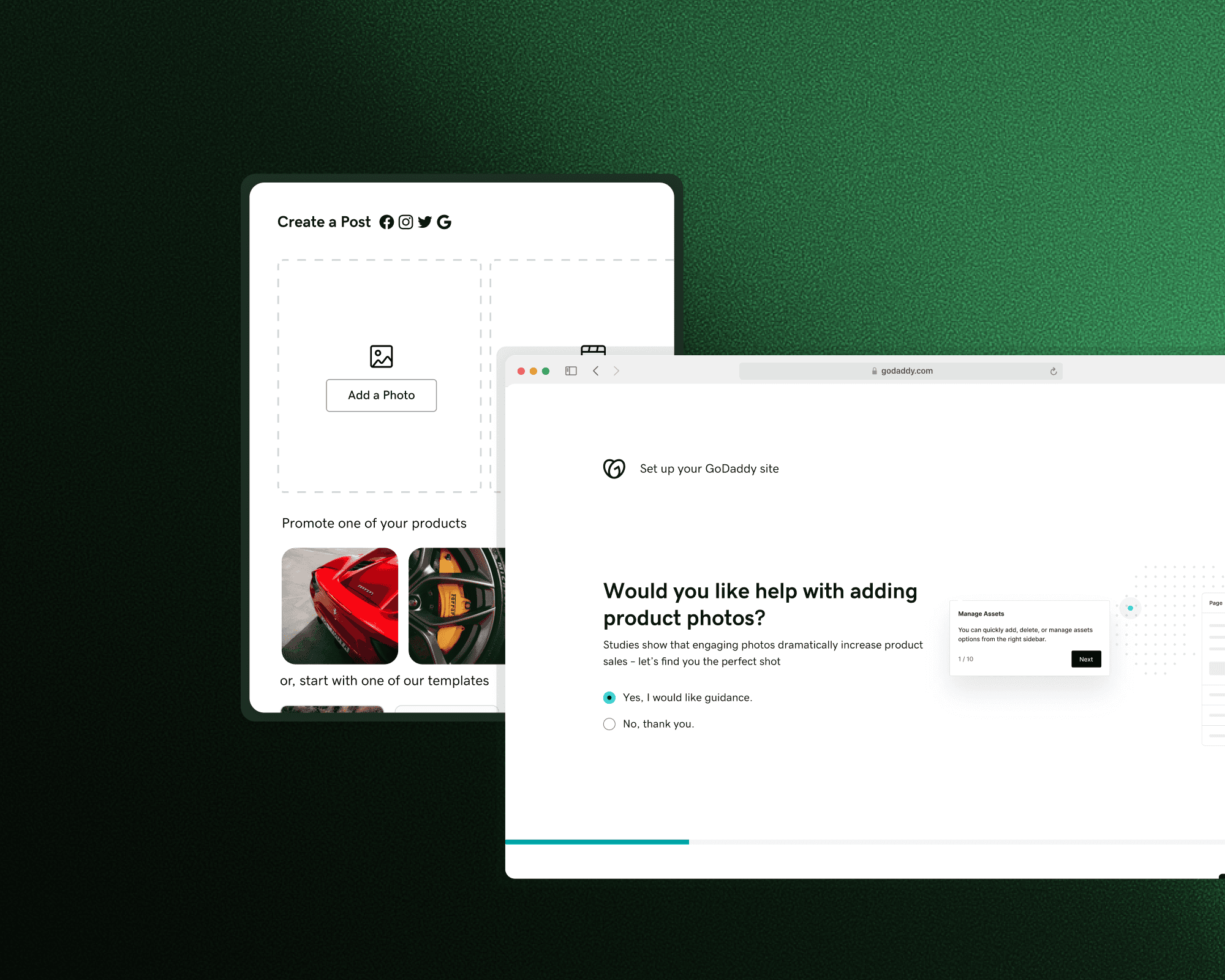
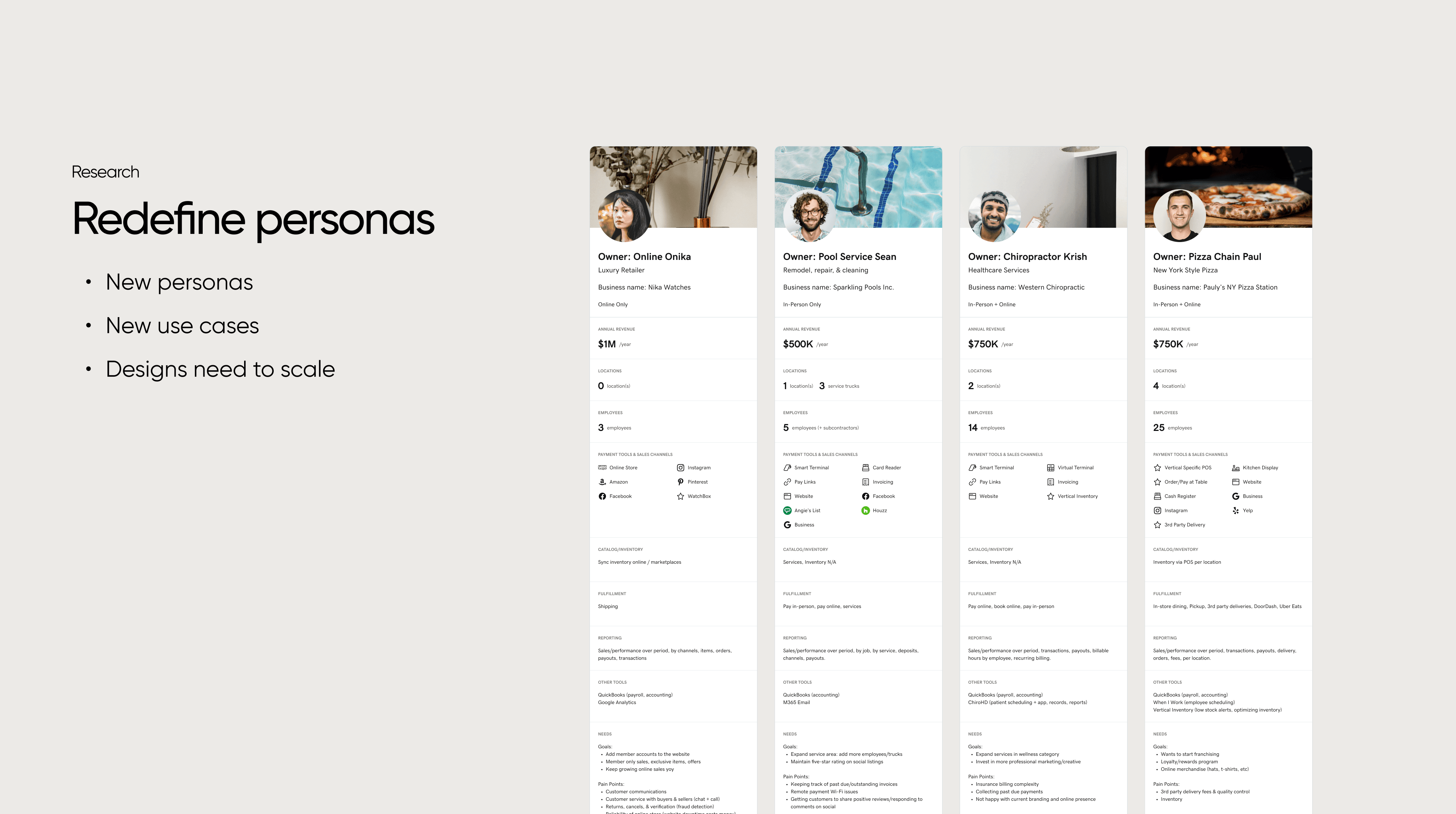
The project involved auditing the underperforming legacy experience, redefining our personas, running competitive analysis, and building a modular, testable system that fit into GoDaddy’s new Antares design system. The work touched everything from layout strategy and navigation patterns to content prioritization and inline guidance.
Challenge.
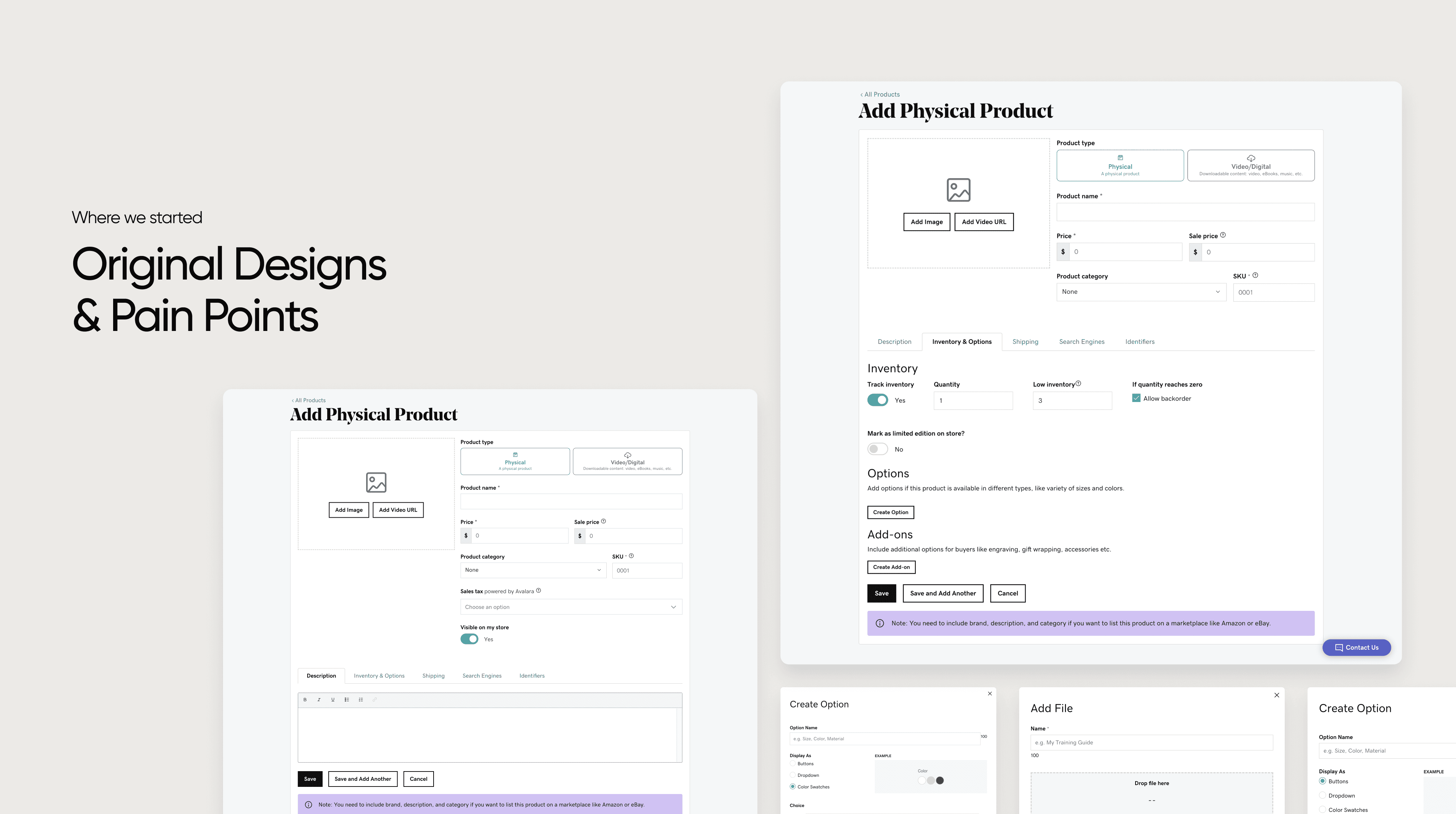
The legacy product creation flow was clunky, outdated, and underperforming. Content was hidden behind tabs, guidance was minimal, and the hierarchy was hard to parse — leading to errors, low completion rates, and overall user frustration.
Our task was to rethink the system from the ground up. That meant identifying what worked, what didn’t, and how to rebuild it with clarity, modularity, and data-backed decision-making — while also stress-testing and contributing to the evolving design system.
Outcomes.
The redesigned experience launched in stages, with measurable improvements at each release:
25% increase in first-time task completion, indicating better clarity and usability
33% decrease in time on task, dropping from ~15 minutes to under 10
5% reduction in product addition errors, especially around pricing and inventory
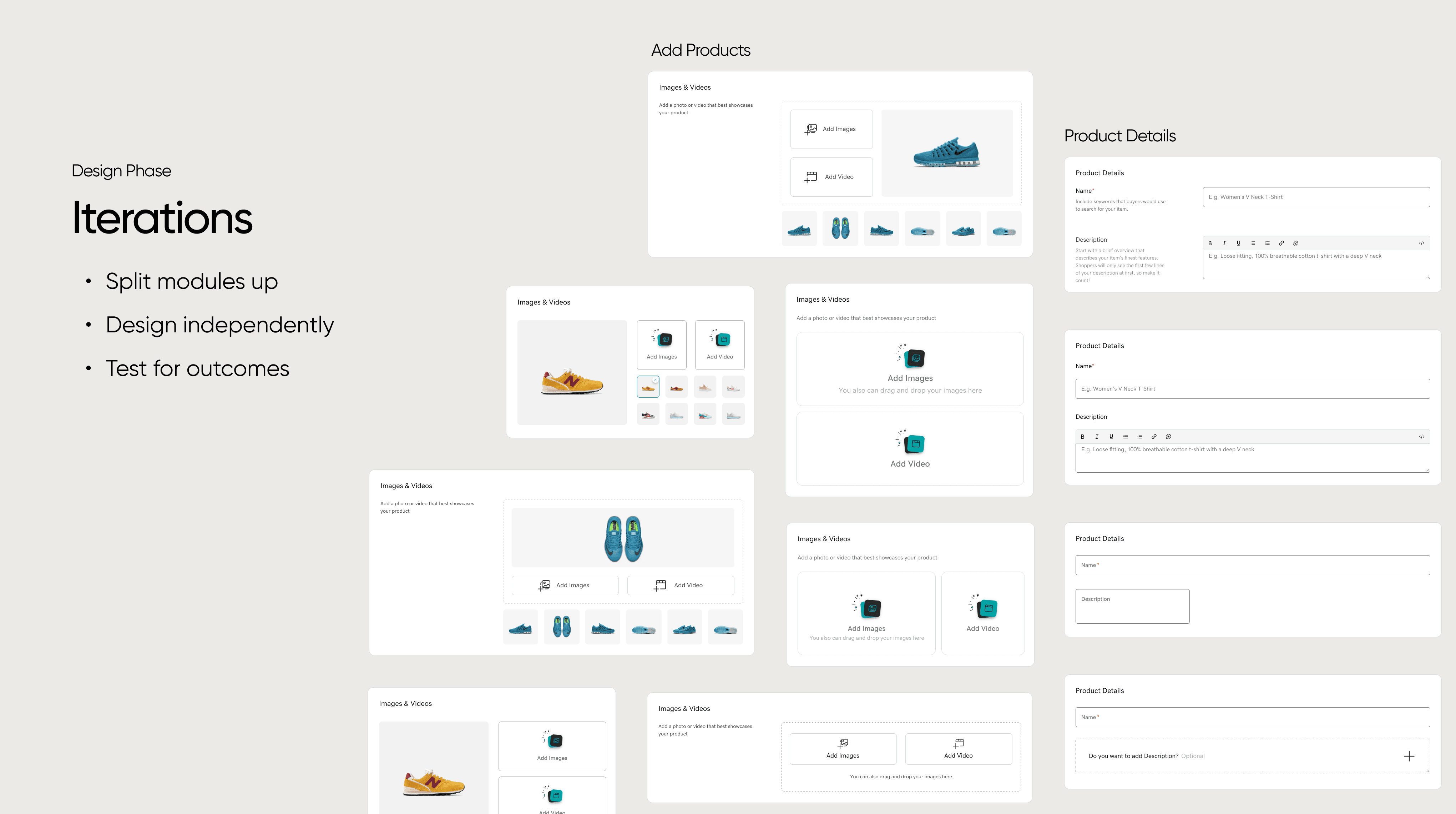
Modular design system implementation enabled rapid iteration and clean handoff to engineering
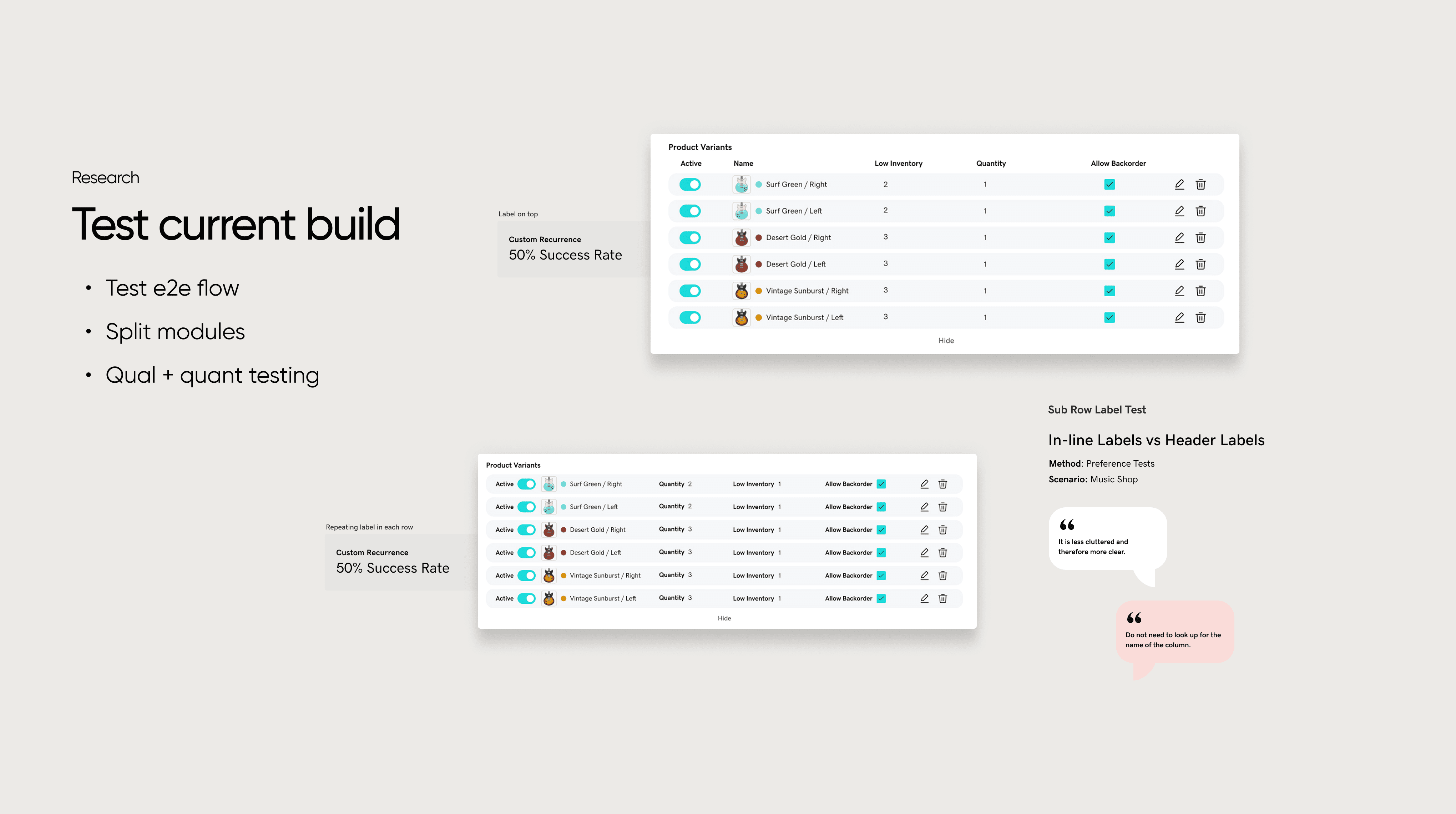
Qual + quant testing across modules validated layout changes, split flows, and guidance treatments
Quick pivots post-launch (e.g. switching to a two-column layout, collapsing optional content, reprioritizing must-haves) showed responsiveness to real user behavior
User feedback highlighted improved confidence and praised the placement and visibility of critical inputs